Appearance, depth and geometry
RGB provides visual observations, stereo depth supplies observed metric geometry, and CAD provides the instrument model. Masks restrict the observed object support; errors can propagate into candidate ranking.
Individual research · Imperial College London
Large Needle Driver · RGB–Stereo–CAD Pipeline
Mar 2026 – Sep 2026Symmetry-aware geometric reranking raised top-1 ADD@5 mm from 44.11% to 57.75% across 968 valid pose outputs.
Completed MRes research
Role: Individual MRes research on geometric pose reranking and evaluation.
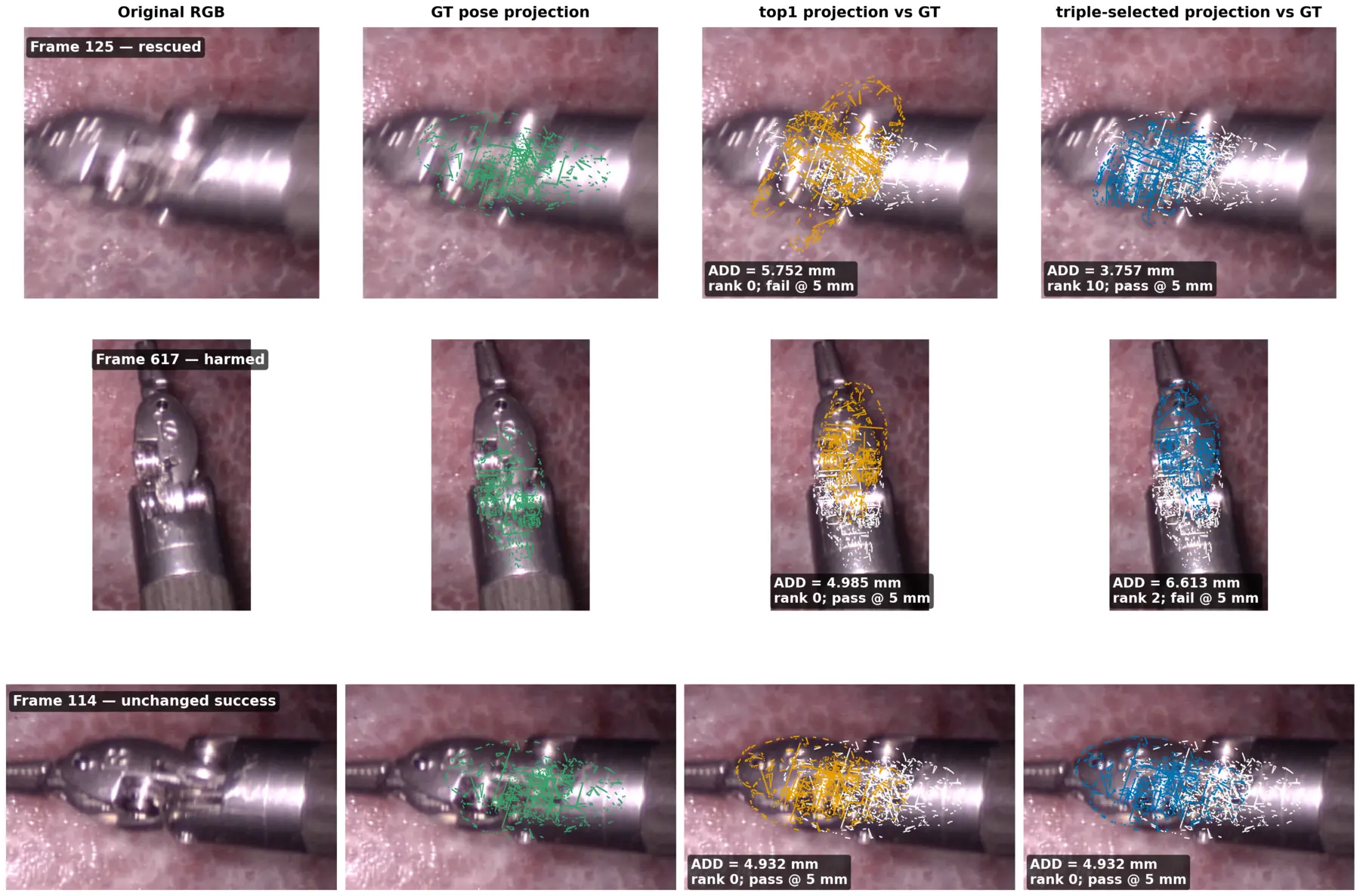
A foundation pose estimator can generate a valid candidate while ranking a geometrically inconsistent pose first. The object is symmetric, thin, partially occluded and evaluated at a strict 5 mm ADD threshold.
System representation
A pose is an object's position and orientation. This project estimates both for the needle driver. My focus is the final choice: a useful pose can already be in the list, yet the estimator selects another one.
One recorded example: frame 125, sym252. Other frames can worsen; the full comparison remains below.
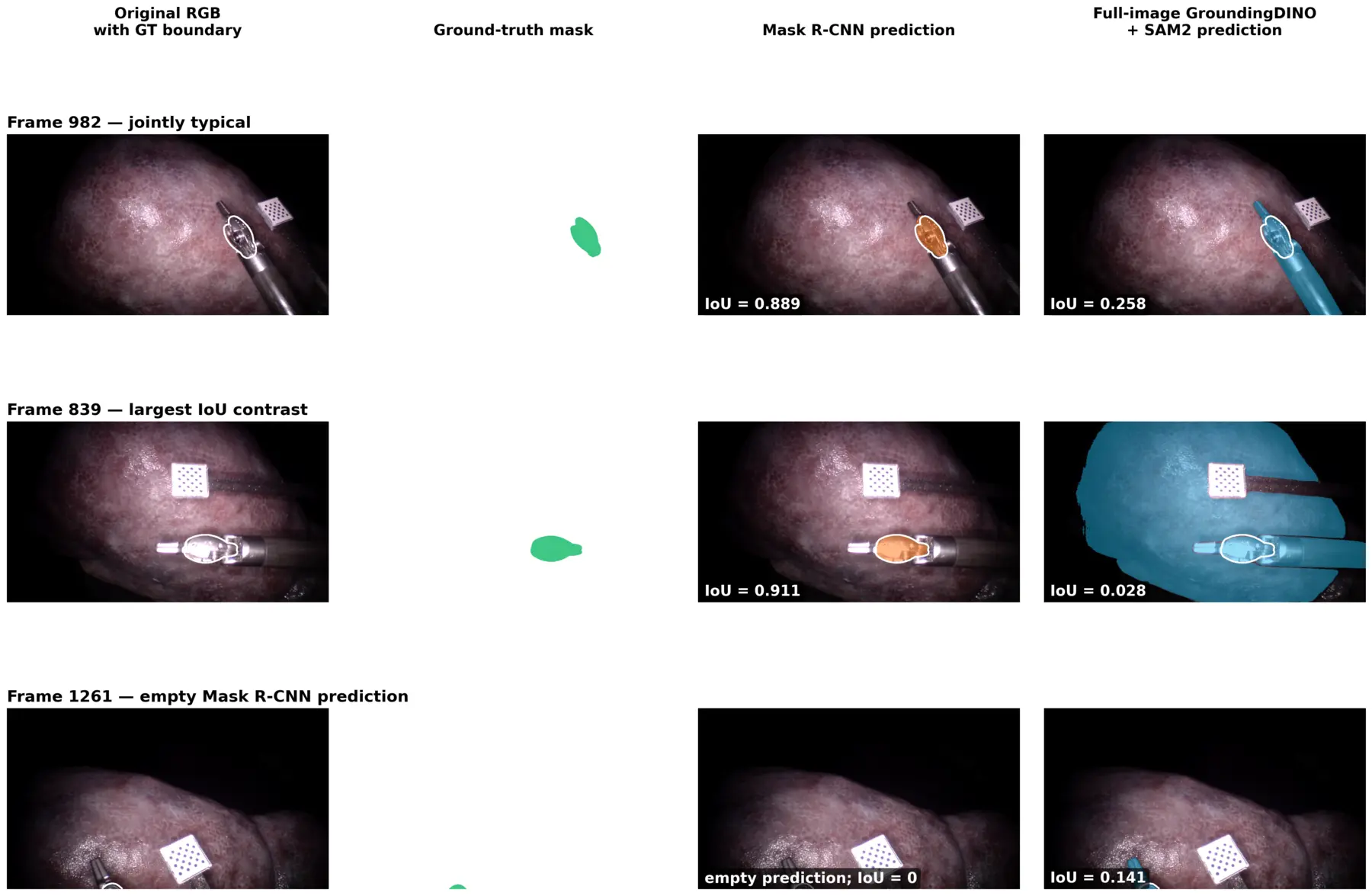
Mask R-CNN marks the pixels belonging to the target region. The pose pipeline uses these existing predictions.
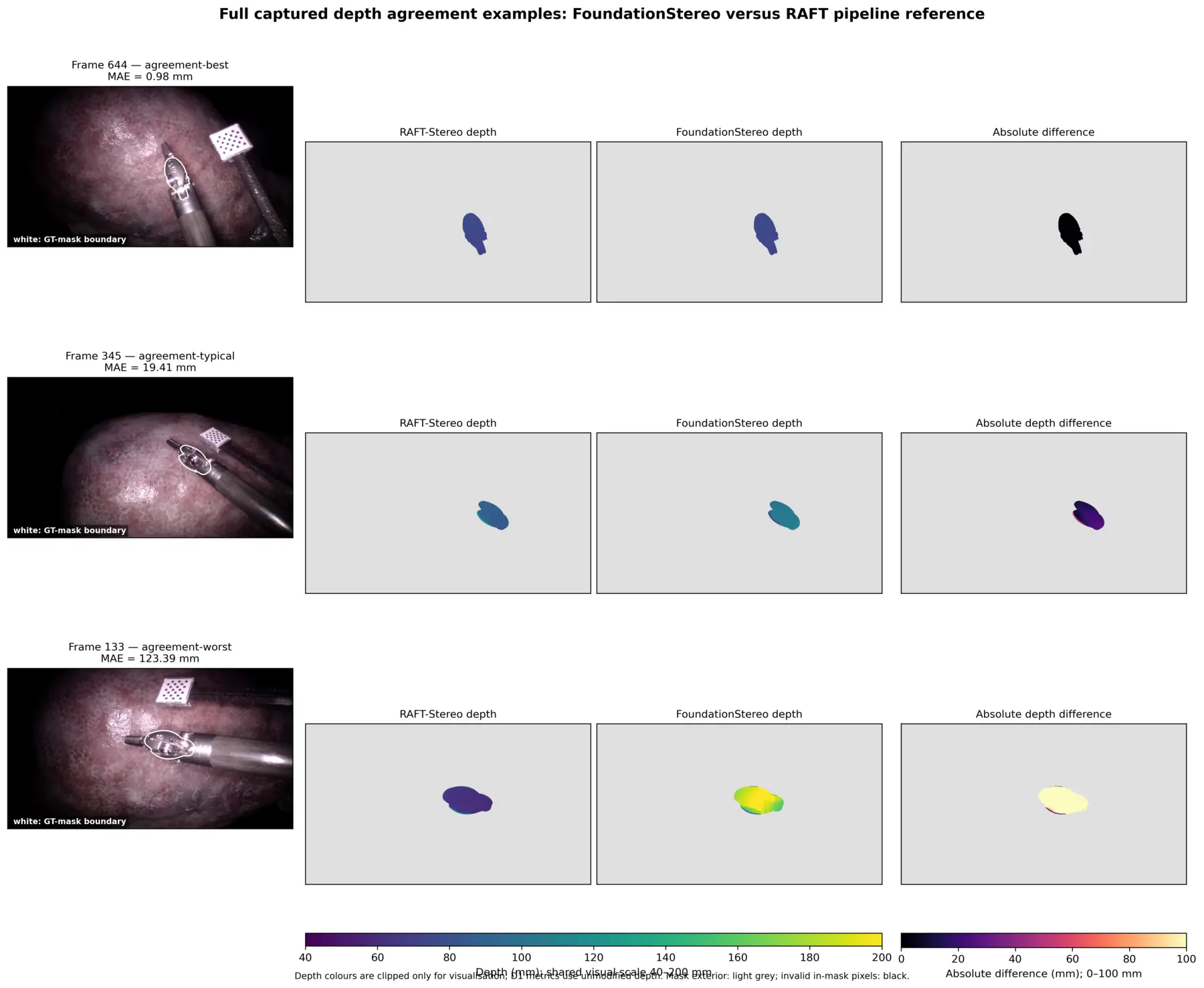
The pipeline uses precomputed RAFT-Stereo depth supplied with the dataset.
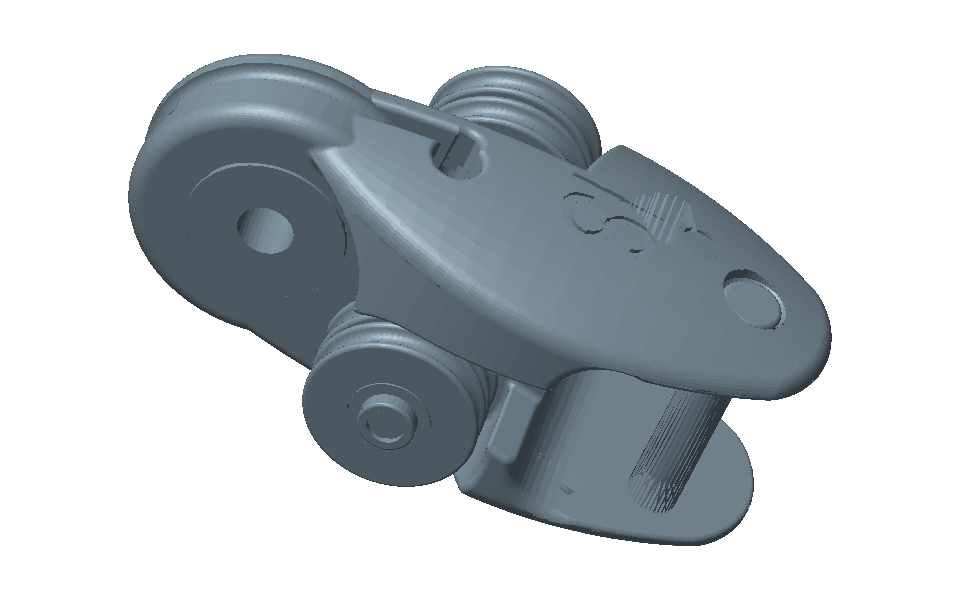
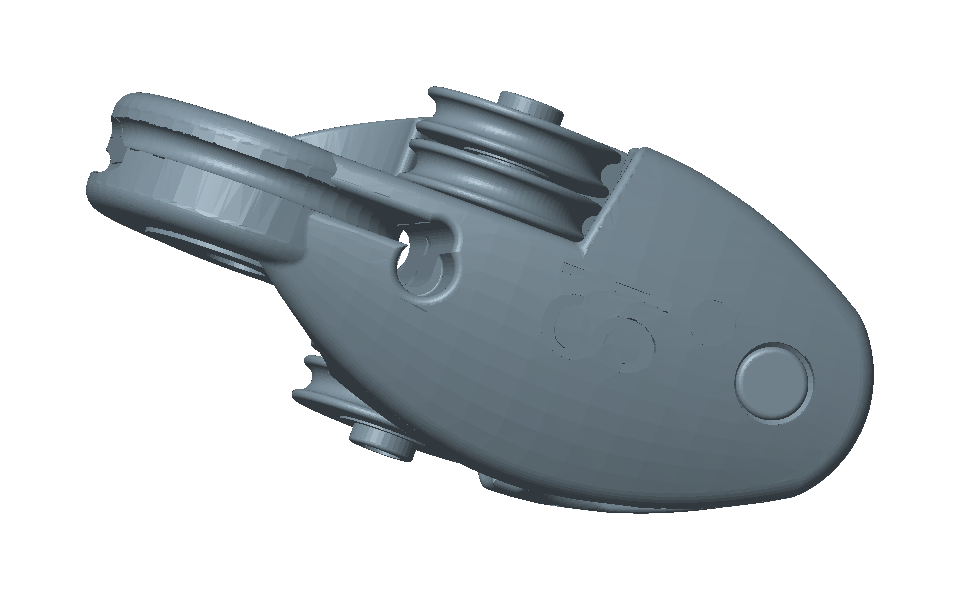
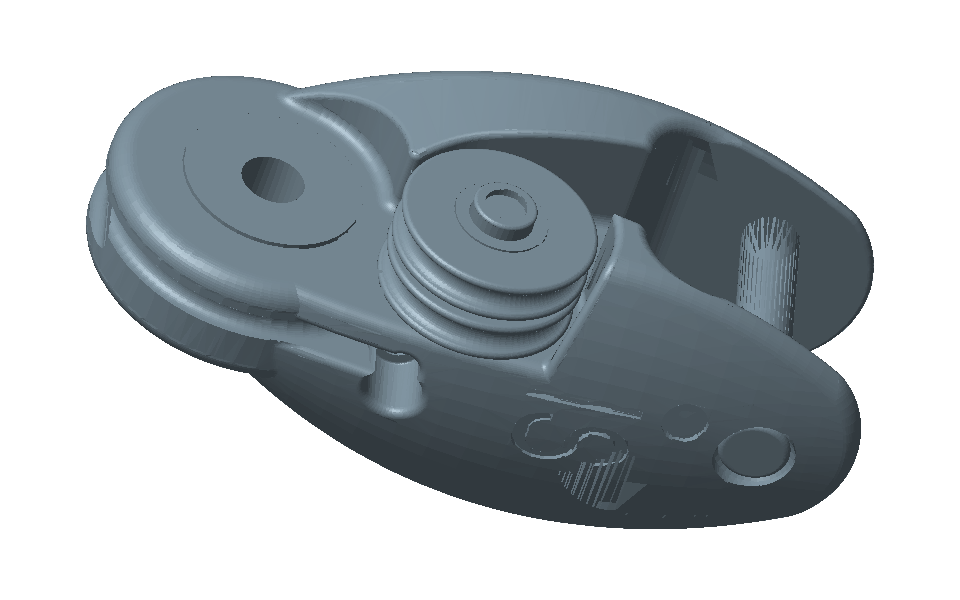
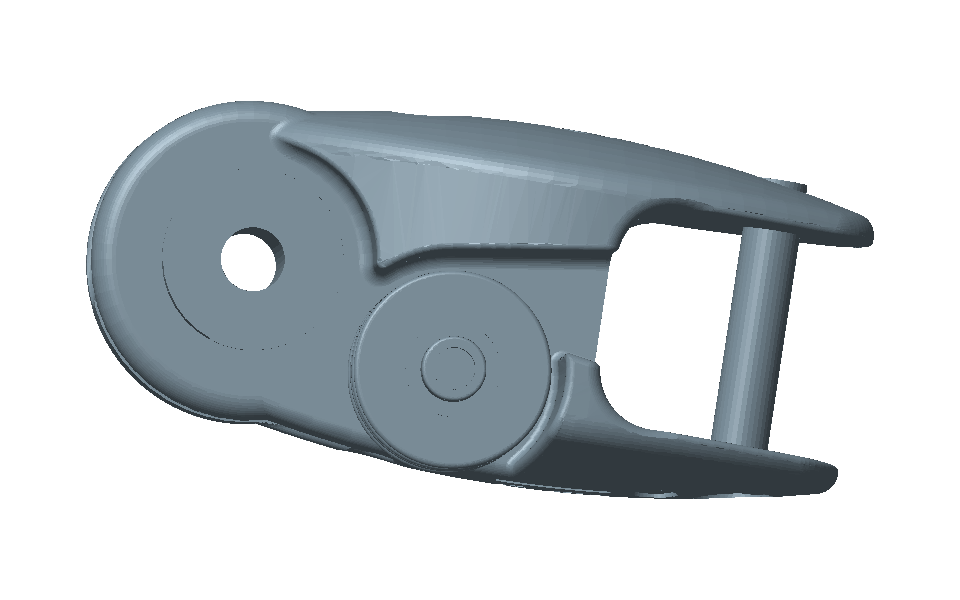
CAD supplies the shape. Camera calibration relates 3D points to image pixels.
RGB, mask, depth, CAD and camera parameters enter together. First in the final ranking is not necessarily closest to the reference.
Check candidates in their original order and select the first that meets the conditions. If none qualifies, keep the original first choice.
ADD compares corresponding CAD points under the predicted and reference poses. A mean distance below 5 mm passes this project's threshold.
RGB, stereo frames and CAD feed segmentation and metric stereo depth. The pipeline converts CAD from millimetres to metres and centres it at its centre of mass.
Inputs: stereo RGB observations and the Large Needle Driver CAD model.
Mask R-CNN (ResNet-101 + FPN) supplies the object mask used by the pose pipeline. GroundingDINO + SAM2 and its local-window variant are comparison methods.
The pose pipeline reads RAFT-Stereo depth. The diagnostic figure compares FoundationStereo against that depth reference; the difference is between two estimates, not error against ground-truth depth.
Any6D generates and scores pose hypotheses from RGB, the object mask, depth and CAD.
Geometric constraints reorder the Any6D candidates. The overlays show the original top-1 and the selected pose against GT, including rescued, harmed and unchanged cases.
Core Ideas / Concept Primer
RGB provides visual observations, stereo depth supplies observed metric geometry, and CAD provides the instrument model. Masks restrict the observed object support; errors can propagate into candidate ranking.
sym252 and sym126 describe Any6D initial rotation configurations. The reported evaluation uses ordinary ADD, which compares corresponding CAD points rather than ignoring axial differences.
The ablation compares single and combined geometric constraints, with a higher top-1 score for the triple constraint.
Top-1 evaluates the selected hypothesis; the oracle ceiling asks whether a correct candidate existed at all. ADD@5 mm applies a strict 5 mm pose-evaluation threshold.
Evaluation uses top-1 ADD@5 mm under sym252, reports 968 valid outputs from 970 frames, and compares selected poses with an oracle candidate ceiling.
sym252; default top-1 versus triple geometric reranking
frames 1261 and 1262 failed
sym252; a valid candidate existed but was not always ranked first
8,652 seconds total; peak GPU memory 4.25 GiB
Empty or inaccurate segmentation changes the observed object support.
Report empty outputs explicitly and separate upstream failure from pose-ranking failure.
Thin reflective geometry and occlusion destabilise correspondence.
Use mask-restricted diagnostics and retain representative best, typical and worst cases.
A noisy geometric cue can demote a correct top-1 hypothesis.
Keep rescued, harmed and unchanged groups visible instead of reporting only aggregate gain.
Defined the modular RGB–stereo–CAD research pipeline.
Implemented the pipeline and geometric candidate reranking, retaining intermediate outputs for diagnosis.
Compared segmentation, stereo depth, symmetry handling and reranking; analysed quantitative results and failure cases.
Individual MRes work at the Hamlyn Centre, supervised by Dr Stamatia (Matina) Giannarou. Project 332 provided the dataset and research setting.